

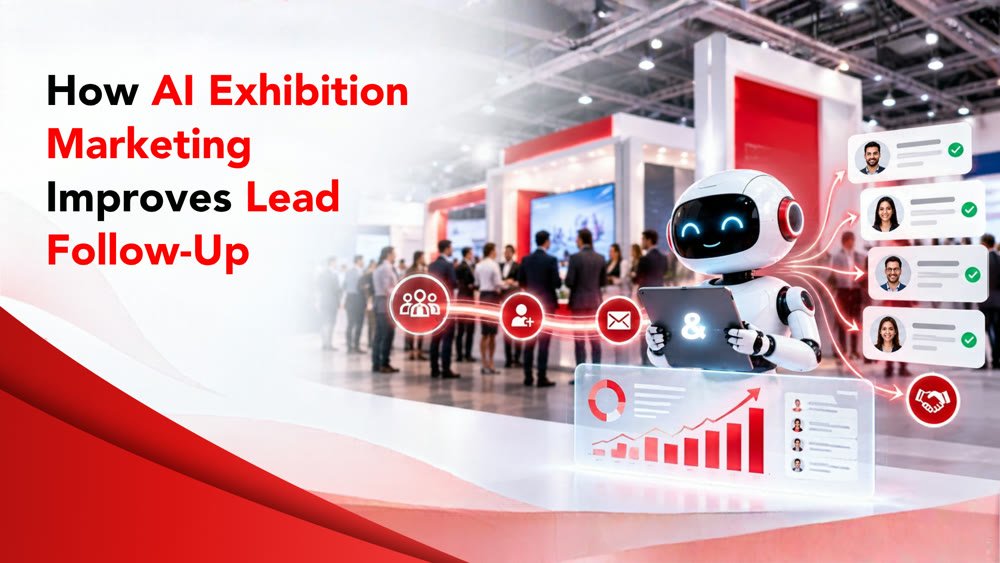
How AI Exhibition Marketing Improves Lead Follow-Up
An exhibition can attract hundreds of visitors, but how many become genuine business opportunities? Many exhibitors collect business cards, scan badges, and exchange contact details, only to struggle with follow-ups after the event.
AI exhibition marketing helps businesses improve this process by organising visitor information, supporting lead qualification, personalising communication, and automating routine follow-up tasks. When combined with human interaction and a clear sales process, AI can help exhibitors turn more event conversations into meaningful business opportunities.
Quick Summary
AI Organises Follow-Up. People Still Close the Deal.
AI can prioritise visitors, draft personalised messages and automate reminders — but it cannot replace genuine conversations or a defined sales process. The exhibitors who convert the most leads are the ones who pair AI-assisted organisation with fast, relevant, human follow-up.
Why Does Exhibition Lead Follow-Up Need a Better Strategy?
Exhibition leads often lose momentum when teams wait too long to respond or send the same generic message to every visitor. Without clear notes and lead priorities, sales teams may not know which prospects need immediate attention.
A strong follow-up strategy starts before the event. Marketing and sales teams should agree on target visitors, qualification questions, lead ownership, and the next action for each prospect. AI can support this process, but it cannot replace genuine conversations or an effective sales team.
How Can AI Improve Exhibition Marketing and Lead Management?
1. Identify High-Potential Visitors
AI-supported lead scoring can help teams prioritise visitors based on relevant information, such as job role, company type, stated business needs, product interest, and purchase timeline.
For example, an industrial equipment manufacturer might meet procurement managers, distributors, consultants, and students at one exhibition. A defined qualification process helps sales teams focus on prospects whose requirements match the company's offerings.
AI recommendations should be reviewed by the team, especially when information is incomplete or a visitor's buying intent is unclear.
2. Capture Visitor Information More Efficiently
Digital forms, QR codes, badge-scanning tools, and connected CRM systems can reduce manual data entry. AI-enabled tools may also summarise conversation notes or organise enquiries into useful categories.
Collect only the information needed for follow-up. Explain how contact details will be used, obtain appropriate permission for marketing communications, and follow applicable data-protection requirements.
3. Personalise Post-Exhibition Follow-Ups
AI can help draft follow-up emails based on the visitor's interests, questions, and discussion at the booth. Instead of sending everyone the same thank-you message, teams can share relevant product information, brochures, demonstrations, or meeting invitations.
For example, a visitor who asks about equipment specifications may receive the relevant technical document. A prospect exploring a project quotation may receive a meeting invitation.
Review AI-generated messages before sending them. Confirm technical details, avoid unsupported promises, and ensure each message reflects the actual conversation.
4. Automate Reminders and Lead Assignment
CRM automation can assign leads to the right salesperson, schedule reminders, and flag enquiries that have not received a response. AI can assist with summaries and suggested next steps where the platform supports these features.
This reduces the risk of promising a quotation or product demo at the exhibition and then forgetting to deliver it.
What Does an AI-Assisted Exhibition Follow-Up Process Look Like?
| Stage | Recommended Action |
|---|---|
| Before the event | Define target visitors, qualification criteria, and follow-up templates |
| During the event | Capture contact details, interests, notes, and agreed next steps |
| After each day | Review lead quality and assign owners |
| Within 24–48 hours | Contact high-priority prospects with relevant, personalised messages |
| Following weeks | Nurture other suitable leads and track meetings, quotations, and opportunities |
This is a practical suggested workflow, not a guarantee of conversion. Follow-up timing should reflect the prospect's needs and the commitments made during the conversation.
How Can Businesses Measure Exhibition Marketing Results?
Do not measure exhibition success by visitor numbers alone. Track the outcomes that connect event participation to sales.
- Qualified leads: How many contacts match your target customer profile?
- Follow-up completion: How many leads received the promised response?
- Meeting conversion: How many prospects agreed to a sales meeting or demonstration?
- Opportunity creation: How many conversations progressed into genuine sales opportunities?
- Revenue contribution: Which event-generated opportunities eventually resulted in business?
Review these metrics after each exhibition to improve future targeting, engagement, and follow-up.
Key Takeaways
- AI can support visitor qualification, data organisation, personalised communication, and reminders.
- Accurate visitor notes make follow-ups more relevant.
- Human review is essential for technical, commercial, and high-value communications.
- CRM integration helps teams assign leads and track progress.
- Qualified opportunities and revenue are more meaningful measures than badge scans alone.
Frequently Asked Questions
How is AI used in exhibition marketing?
AI can support exhibition marketing by helping teams organise visitor data, prioritise leads, draft personalised follow-up messages, and automate reminders. The exact capabilities depend on the tools used and the quality of the information collected. Human review remains important for accurate, relevant communication.
How can exhibitors generate better leads at trade shows?
Exhibitors can improve lead quality by defining their target audience, asking relevant qualifying questions, recording visitor interests, and assigning leads to the right salesperson. AI-assisted scoring may help prioritise contacts, but teams should validate recommendations before deciding which prospects deserve immediate attention.
How soon should businesses follow up after an exhibition?
Businesses should follow up promptly, especially when a visitor requests a quotation, demonstration, or technical document. A practical approach is to contact high-priority prospects within 24–48 hours and personalise the message using notes from the conversation. The timing should reflect the commitment made at the booth.
Can AI automate exhibition lead follow-up emails?
AI can help draft messages, suggest relevant content, and support automated email workflows through compatible marketing or CRM platforms. Businesses should review messages for accuracy, relevance, and tone before sending them. They should also follow applicable consent, privacy, and marketing communication requirements.
What tools help with exhibition lead management?
Useful tools include QR-code forms, event lead-retrieval apps, CRM platforms, email marketing systems, and workflow automation tools. Some offer AI features for summaries, scoring, or content drafting. Choose tools based on integration, security, ease of use, and the team's actual follow-up needs.
How can businesses measure exhibition lead generation ROI?
Track qualified leads, follow-up completion, meetings booked, opportunities created, and revenue linked to the event. Compare these outcomes with exhibition costs, including booth design, travel, staffing, and promotion. Because B2B sales can take months, continue tracking event-generated opportunities after the exhibition ends.
Turn Exhibition Conversations into Business Opportunities
AI can make exhibition marketing more organised, but results still depend on clear objectives, meaningful visitor interactions, and timely follow-up. ChalkWalk Consulting helps businesses connect exhibition strategy, stall design, branding, digital promotion, and post-event marketing to support stronger business outcomes.
Planning Your Next Exhibition?
Contact ChalkWalk Consulting to discuss your exhibition and marketing requirements.
Leave a Comment
Your email address will not be published. Required fields are marked *