

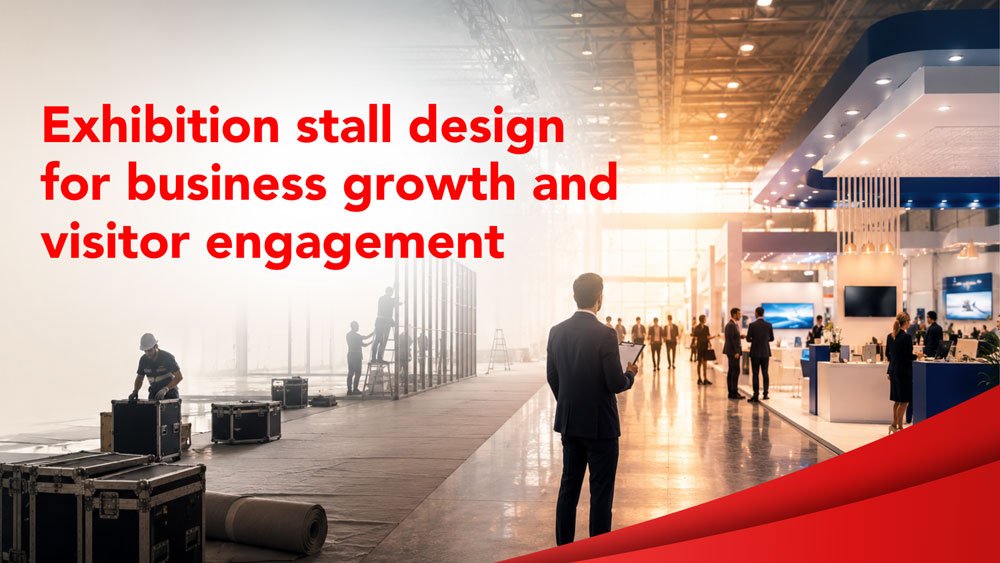
Your Exhibition Does Not Begin on the Opening Day
Exhibition stall design is only one part of a successful exhibition strategy. While a stall may remain visible for just three or four days, the planning behind it can begin months in advance.
Companies that achieve meaningful exhibition results do not treat participation as a simple stall fabrication activity. They plan it as a complete business campaign built around clear objectives, visitor experience, execution, and post-event follow-up.
The right approach starts long before the exhibition doors open.
Quick Summary
What is exhibition stall design?
Exhibition stall design is the planning and visual development of a branded exhibition space. It includes layout, graphics, lighting, product displays, visitor movement, meeting areas, and technology.
What Should You Plan Before an Exhibition?
The first question should not be, “What should our stall look like?”
Instead, ask: “What business outcome should this exhibition create?”
Your objective could be to:
- Launch a new product or technology
- Generate qualified leads
- Meet existing customers
- Enter a new market
- Connect with distributors
- Demonstrate products
- Build brand visibility
- Meet decision-makers and potential partners
Once the objective is clear, your exhibition stall design becomes more purposeful. A product demonstration booth requires a different layout from a stall focused on private business meetings or lead generation.
How Does Exhibition Stall Design Influence Visitor Engagement?
Visitors often make a quick decision about whether to stop at a stall. Your brand message therefore needs to be clear from the aisle itself.
A strong exhibition environment should quickly communicate three things:
- Who are you?
- What do you offer?
- Why should the visitor stop?
Graphics, lighting, product displays, digital screens, demonstrations, and messaging should work together instead of competing for attention.
The goal is not to put everything on the walls. The goal is to make the most important information easy to understand.
Plan the Visitor Journey Before the Stall Structure
An effective exhibition stall should guide visitors naturally from first contact to meaningful business conversation.
A simple visitor journey can be:
This means asking practical questions before finalising the layout:
- Can visitors understand the offering from the aisle?
- Is the entrance open and welcoming?
- Can products be demonstrated comfortably?
- Is there enough space for conversations?
- Are meeting areas accessible while maintaining privacy?
- Can visitor information be captured without disrupting engagement?
Good exhibition planning makes the physical space support the sales process.
What Does End-to-End Exhibition Management Include?
Exhibition success depends on much more than fabrication. A typical project can involve:
- Exhibition strategy and concept development
- 3D stall design and technical drawings
- Venue coordination and approvals
- Stall fabrication and installation
- Branding and graphic production
- Product displays and demonstrations
- AV and technology integration
- Furniture, lighting, and hospitality
- Logistics and on-site supervision
- Lead-capture systems
- Pre-event marketing and communication
- Social media and content creation
- Post-event lead management
- Dismantling and project closure
When these activities are handled by disconnected vendors, communication gaps can affect timelines, budgets, quality, and the visitor experience.
How Can ChalkWalk Help With Exhibition Projects?
ChalkWalk approaches exhibitions as end-to-end brand and business projects, not simply stall-building assignments.
From understanding the exhibition objective to developing the concept, designing the stall, coordinating fabrication, integrating technology, managing on-site execution, and supporting post-show engagement, the process can be handled through one coordinated team. This helps businesses maintain:
- Consistent brand communication
- Better control over timelines and budgets
- Clear project responsibility
- A coordinated visitor experience
- Lower operational pressure on internal teams
- Better alignment between marketing and business goals
Explore ChalkWalk’s event and exhibition services to see how an exhibition project can be planned from strategy to execution.
What Happens After the Exhibition?
The exhibition should not end when the lights are switched off.
The more important questions come afterwards:
- How many relevant visitors engaged with the brand?
- How many were decision-makers?
- Which products attracted the most interest?
- How many conversations became qualified opportunities?
- Were leads followed up quickly?
- What business value came from the exhibition?
With proper lead classification, CRM processes, and timely follow-up, an exhibition can become a measurable business-development channel rather than simply a branding expense.
Conclusion: The Stall Is Only the Visible Part
A successful exhibition is not necessarily the most expensive one. It is the one where business objectives, exhibition stall design, visitor experience, execution, and follow-up work together.
The stall may be visible for three days, but the opportunity created through it can continue for months.
Planning Your Next Exhibition?
Work with ChalkWalk Consulting for an end-to-end approach covering exhibition strategy, stall design, fabrication, technology, visitor engagement, and post-show business follow-up. Explore our Events & Exhibitions Services.
Frequently Asked Questions
What is exhibition stall design?
Exhibition stall design is the planning and visual development of a branded exhibition space. It includes layout, graphics, lighting, product displays, visitor movement, meeting areas, and technology.
How early should an exhibition be planned?
Ideally, exhibition planning should begin several months before the event. Early planning allows sufficient time for strategy, design approvals, fabrication, logistics, marketing, and lead-generation preparation.
What makes an exhibition stall successful?
A successful stall combines a clear business objective, strong visual communication, an easy visitor journey, effective product presentation, comfortable discussion areas, and a structured lead-capture and follow-up process.
Is exhibition stall fabrication enough for a successful exhibition?
No. Fabrication is only one part of exhibition execution. Strategy, design, logistics, visitor engagement, technology, team preparation, lead capture, and post-event follow-up also influence the final business outcome.
How can exhibitions generate business leads?
Exhibitions can generate leads by attracting the right audience, demonstrating relevant products, creating meaningful conversations, capturing visitor information, qualifying prospects, and following up systematically after the event.
Leave a Comment
Your email address will not be published. Required fields are marked *