

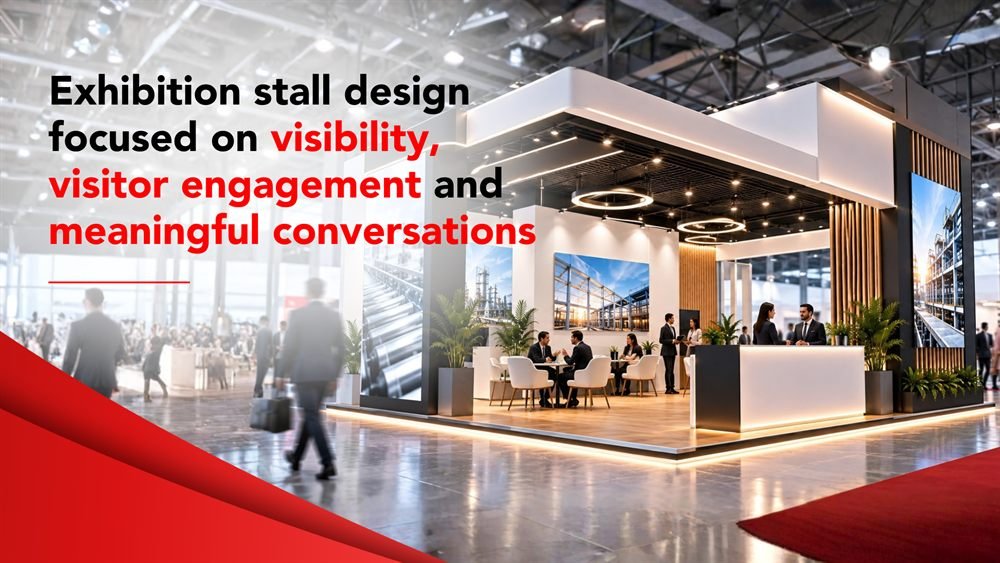
What Makes an Exhibition Stall Attract More Visitors?
Exhibition stall design plays an important role in attracting visitors at busy trade shows and exhibitions. With multiple brands competing for attention, a stall needs to communicate clearly, look approachable and give visitors a reason to stop.
A successful stall is not always the biggest or most expensive. The right combination of layout, messaging, lighting, branding and visitor experience can make a stall more noticeable and easier to engage with.
Quick Summary
What Makes an Exhibition Stall Attractive?
An attractive exhibition stall should help visitors understand three things quickly: who you are, what you offer and why they should stop. Clear communication and a visitor-friendly layout make it easier for people to move from seeing your stall to entering it.
Recent exhibition design guidance also highlights the importance of clear messaging, open sightlines, purposeful layouts and interactive experiences.
1. Use a Clear and Visible Message
Your main message should be easy to understand from the aisle. Avoid filling the stall with too much text or multiple competing messages. Use:
- A short headline
- Clear product or service communication
- Strong brand visibility
- Large, readable graphics
- One primary message for each major display
Visitors should not have to enter your stall to understand what your company does.
2. Keep the Layout Open and Welcoming
A closed or crowded entrance can make visitors hesitate. An open layout creates better visibility and allows people to see products, demonstrations and conversations happening inside.
Your exhibition stall design should create a natural path:
Notice → Enter → Explore → Interact → Discuss
Keep important products and activities visible from the aisle. Avoid placing counters, furniture or displays where they block the entrance or visitor movement.
Make the Entrance Easy to Approach
The entrance should feel inviting rather than restrictive. Position reception counters to the side where possible and maintain clear sightlines into the stall.
This helps visitors understand that they can comfortably step inside and explore.
3. Use Lighting to Create Attention
Lighting can help important areas stand out in a busy exhibition hall. Use it strategically around:
- Brand signage
- Product displays
- Demonstration areas
- Key architectural elements
- Meeting zones
Good lighting should support the design rather than overwhelm it.
Highlight What Matters Most
Instead of lighting every element equally, create visual focus around the products or messages you want visitors to notice first.
4. Give Visitors a Reason to Stop
A visually attractive stall may get attention, but an experience can encourage visitors to stay longer. Consider adding:
- Live product demonstrations
- Interactive displays
- Product samples
- Digital presentations
- QR-based information
- Before-and-after demonstrations
The key is relevance. Technology should support the visitor journey rather than simply being added for decoration.
Make Your Product the Hero
For B2B companies, showing a product in action can communicate more effectively than several paragraphs of technical information.
Position demonstrations where they can be seen from the aisle without creating congestion.
5. Design Around Your Target Visitor
Not every exhibition requires the same stall layout.
A manufacturing company may need space for machinery or product demonstrations. A technology company may need interactive screens. A service business may require comfortable meeting areas.
Start With the Visitor Journey
Before finalising the design, ask:
- What should visitors notice first?
- What should they understand immediately?
- What product or service should they explore?
- Where should the sales conversation happen?
- What action should visitors take before leaving?
This approach helps connect creative design with business objectives.
Does Bigger Mean More Visitors?
Not necessarily. A larger stall does not automatically attract more visitors. A well-planned smaller stall can be easier to understand and navigate than a large space filled with excessive graphics, furniture and displays.
The goal should be clarity, visibility and interaction, not simply size.
How Can You Improve Exhibition Stall Design?
Start planning around your exhibition objective, target audience and available space. Then develop the layout, messaging, graphics, lighting and visitor zones around that objective.
A photorealistic 3D concept can also help teams review the layout, lighting and branding before fabrication begins, reducing uncertainty before the physical stall is built.
Frequently Asked Questions
What makes an exhibition stall attract visitors?
Clear messaging, strong visibility, an open layout, effective lighting, engaging displays and a clear reason to enter can help attract visitors.
How can I make a small exhibition stall stand out?
Use a simple message, strong branding, open sightlines and one or two high-impact product or interaction points instead of overcrowding the space.
Does lighting matter in exhibition stall design?
Yes. Strategic lighting can draw attention to important branding, products, displays and architectural elements.
Are interactive displays useful at exhibitions?
They can be useful when they support the visitor journey and make the product or service easier to understand.
How early should exhibition stall design start?
Starting early gives your team more time to plan the concept, review 3D designs, finalise branding and coordinate fabrication and installation.
Conclusion
An exhibition stall should do more than look attractive. It should communicate quickly, welcome visitors and create opportunities for meaningful conversations.
With the right exhibition stall design, businesses can turn their exhibition space into a practical brand and engagement environment.
Planning Your Next Exhibition?
Connect with ChalkWalk Consulting for exhibition stall design, fabrication, branding and end-to-end event execution.
Leave a Comment
Your email address will not be published. Required fields are marked *