

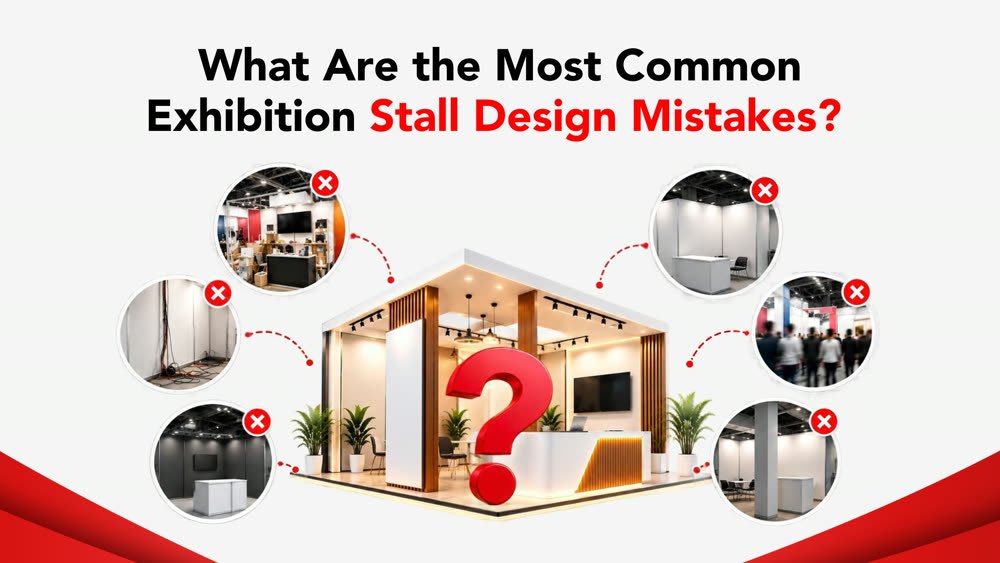
What Are the Most Common Exhibition Stall Design Mistakes?
Exhibition stall design mistakes can affect how visitors notice, understand and interact with your brand at a trade show. A stall may look impressive, but poor planning, unclear messaging, overcrowding or weak visitor flow can reduce its impact.
For B2B companies, an exhibition stall should do more than display a logo. It should communicate the brand, showcase products or services and create opportunities for meaningful business conversations.
Quick Summary
What Are the Most Common Exhibition Stall Design Mistakes?
The most common mistakes include poor planning, too much information, weak branding, an overcrowded layout, insufficient lighting and a lack of visitor engagement. Understanding these issues early can help businesses create a more effective exhibition presence.
1. Starting the Design Too Late
One of the biggest mistakes is waiting until the exhibition date is close before starting the stall design process.
Late planning can affect:
- Creative concepts
- 3D design approvals
- Branding and graphics
- Fabrication
- Furniture and lighting
- Logistics and installation
Starting early gives the team enough time to review the concept and make changes before fabrication begins.
2. Adding Too Much Information
Your exhibition stall has limited space and visitors have limited attention. Trying to display every product, service and company achievement can make the stall difficult to understand.
Instead, identify the most important message and communicate it clearly through:
- A strong headline
- Short supporting copy
- Product visuals
- Clear brand elements
- Simple calls to action
What Should Visitors Understand First?
Visitors should quickly understand who you are, what you offer and why your solution may be relevant to them.
Your primary message should be visible from the aisle rather than hidden inside the stall.
3. Creating a Crowded Layout
Too much furniture, equipment or display material can make a stall feel difficult to enter.
A good exhibition stall design should provide clear movement between the entrance, product displays, demonstration areas and meeting spaces.
Keep important areas visible and avoid blocking the entrance with large counters or unnecessary structures.
4. Ignoring Lighting
Lighting is not only a decorative element. It can help direct visitor attention toward important parts of the stall.
Poor lighting can make graphics, products and branding less noticeable, especially in a busy exhibition hall.
Where Should Lighting Be Used?
Consider focused lighting for:
- Brand signage
- Product displays
- Demonstration areas
- Key architectural features
- Meeting zones
The objective is to highlight what matters rather than illuminate everything equally.
5. Weak or Inconsistent Branding
An exhibition is an opportunity to strengthen brand recognition. Using too many colours, fonts, messages or unrelated graphics can make the stall look disconnected from the company's identity.
Your stall should maintain consistency across the logo, colour palette, typography, graphics and messaging.
Why Is Brand Consistency Important?
When visitors can recognise your brand quickly, it becomes easier for them to connect the stall with your company and its offerings.
6. Designing Without the Target Audience in Mind
A stall should be designed around the people you want to attract.
For example, a manufacturing company may need product demonstrations or machinery displays, while a technology company may benefit from interactive screens and demo stations.
Ask These Questions Before Designing
- Who are our target visitors?
- What problem are they trying to solve?
- What should they notice first?
- What action should they take?
- Where should sales conversations happen?
These questions help connect creative design with business objectives.
7. Forgetting Visitor Engagement
A visually attractive stall may attract attention, but visitors also need a reason to stay. Depending on your business, consider:
- Live demonstrations
- Interactive product displays
- QR codes
- Digital presentations
- Samples
- Expert consultations
The experience should support your business objective rather than adding technology simply for visual appeal.
How Can You Avoid Exhibition Stall Design Mistakes?
Start with a clear objective, understand your target audience and plan the visitor journey before finalising the design.
A 3D stall concept can also help teams review the layout, branding, lighting and display areas before fabrication. This makes it easier to identify practical issues and refine the design before production.
Frequently Asked Questions
What is the biggest exhibition stall design mistake?
A lack of planning and a cluttered message are among the most common problems because they can make the stall difficult to understand.
How can I make my exhibition stall look professional?
Use consistent branding, clear messaging, quality graphics, suitable lighting and an organised layout.
Should an exhibition stall have lots of text?
No. Keep the messaging concise and use visuals to communicate key products, services and benefits.
How important is lighting in exhibition stall design?
Lighting can improve visibility and help direct attention toward products, branding and important display areas.
Can a small stall still attract visitors?
Yes. A smaller stall can create strong visibility with clear branding, an open layout, focused messaging and an engaging visitor experience.
Conclusion
Avoiding common exhibition stall design mistakes starts with planning the stall around your audience, message and business objectives.
Clear communication, smart space planning, consistent branding, effective lighting and meaningful engagement can help create a stall that attracts attention and supports business conversations.
Planning Your Next Exhibition?
Contact ChalkWalk Consulting for exhibition stall design, branding, fabrication and end-to-end event support.
Leave a Comment
Your email address will not be published. Required fields are marked *