

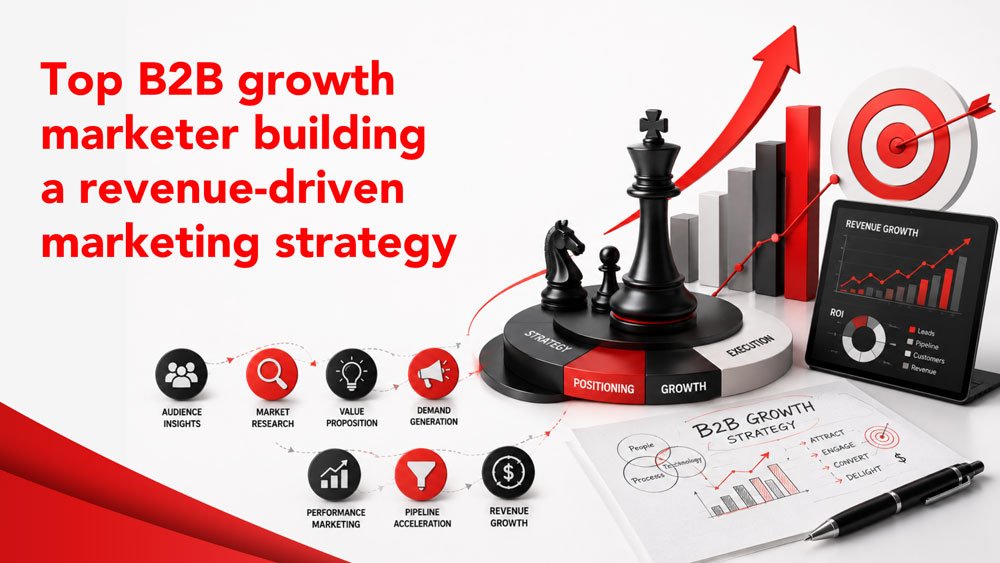
How a Top B2B Growth Marketer Builds a Revenue-Driven Marketing Strategy
In B2B, getting traffic is easy. Getting qualified leads that contribute to revenue is the real challenge. A top B2B growth marketer looks beyond impressions, followers and clicks to understand how every marketing activity can influence the buyer journey and business growth.
For complex B2B industries such as manufacturing, engineering, automation, energy and industrial solutions, marketing needs more than attractive campaigns. It needs a strategy connecting visibility, lead generation, sales and measurable ROI.
That is where a revenue-driven B2B growth strategy makes a difference.
Quick Answer
What Does a Top B2B Growth Marketer Do?
A B2B growth marketer connects marketing activities with business outcomes — treating SEO, content, paid advertising and social media as parts of one growth engine rather than separate activities, so every campaign moves prospects closer to revenue, not just clicks.
What Is Revenue-Driven B2B Marketing?
Traditional marketing often measures success through website traffic, social media engagement or the number of leads generated.
Revenue-driven marketing asks a more important question: “Did marketing help create a genuine business opportunity?”
A strong B2B growth marketer connects marketing activities with business outcomes. Instead of treating SEO, content, paid advertising and social media as separate activities, they work together as parts of one growth engine.
1. Start With the Right B2B Audience
You cannot build a successful growth strategy without knowing who you are trying to reach. A B2B company may have multiple decision-makers, including:
- Business owners
- Plant Heads
- Procurement Managers
- Engineering Heads
- Purchase Teams
- CXOs
- Sales Directors
Each person may have different priorities. A Plant Head may care about operational efficiency, while a Procurement Manager may focus on specifications, pricing and supplier reliability. A revenue-driven strategy creates content and campaigns around these real buying needs.
2. Build Visibility Where Buyers Search
B2B buyers increasingly research online before speaking with a sales representative. This makes SEO, content marketing and website optimization important parts of B2B growth.
The goal is not to rank for every possible keyword. It is to appear when your ideal customer searches for a problem, product, service or solution your company can actually provide. A smart strategy combines:
- High-intent keyword research
- Industry-specific content
- Optimized service and product pages
- Technical blogs
- Case studies and FAQs
- Strong conversion paths
Ranking on Google is valuable, but rankings alone do not pay the bills. Your pages should guide visitors toward meaningful actions such as requesting a quotation, downloading a brochure, scheduling a discussion or submitting an enquiry.
3. Turn Content Into a Lead Generation Engine
B2B buyers rarely make decisions after reading one page. They may visit your website several times, compare competitors, read technical articles and discuss the solution internally. This is why content should support different stages of the buying journey.
- Awareness: Industry trends, educational blogs and problem-focused content.
- Consideration: Product comparisons, technical guides and case studies.
- Decision: Product pages, specifications, testimonials and enquiry-focused content.
4. Use Paid Marketing With a Clear Objective
Google Ads, LinkedIn Ads and other paid campaigns can accelerate visibility, but spending money does not automatically mean generating quality leads. A top B2B growth marketer starts with the business objective. Is the campaign designed to:
- Generate qualified leads?
- Promote a new product?
- Reach a specific industry?
- Support account-based marketing?
- Retarget high-intent visitors?
The campaign, landing page, audience and follow-up process should all work together.
5. Connect Marketing With Sales
One of the biggest problems in B2B marketing is the gap between marketing and sales. Marketing may celebrate lead volume while sales struggles with irrelevant enquiries.
A revenue-driven approach focuses on lead quality and sales readiness. Marketing and sales teams should agree on what makes a lead valuable, including company profile, requirement, budget, authority and buying timeline. This creates a better handover and reduces wasted sales effort.
6. Measure What Actually Drives Revenue
A growth marketer does not stop at likes and impressions. Important B2B metrics include:
- Qualified leads
- Cost per qualified lead
- Lead-to-opportunity rate
- Conversion rate
- Customer acquisition cost
- Pipeline generated
- Sales-qualified opportunities
- Revenue influenced by marketing
These metrics help businesses understand what is working and where marketing budgets should be optimized.
7. Keep Testing, Learning and Improving
B2B growth is not a one-time campaign. Search behaviour changes. Buyer expectations change. Competitors change. New platforms and technologies emerge. That is why successful B2B marketing requires continuous testing. Test different:
- Landing pages
- Ad creatives
- Calls to action
- Content formats
- Audience segments
- Email campaigns
- Offers
Then use performance data to make the next campaign smarter.
How ChalkWalk Approaches B2B Growth Marketing
At ChalkWalk Consulting, we look at B2B marketing as more than simply promoting a company online. Our approach brings together SEO, content marketing, social media, paid marketing, website development, lead generation and sales-focused strategies to create a connected digital growth journey.
For businesses operating in manufacturing, engineering, automation, energy and other B2B sectors, understanding the industry and its buying process is essential.
The objective is simple: build visibility, attract the right audience, generate better opportunities and connect marketing activity with measurable business growth.
Conclusion
The best B2B marketing strategy is not the one that generates the most clicks. It is the one that moves the right prospects closer to revenue.
With the right audience, content, channels, data and sales alignment, marketing can become a genuine growth engine.
That is the difference between simply doing marketing and building B2B growth.
Ready to turn your marketing into a revenue-driven growth engine? Get in touch with ChalkWalk Consulting at info@chalkwalkconsulting.com to discuss your B2B growth strategy.
Frequently Asked Questions
What does a B2B growth marketer do?
A B2B growth marketer develops strategies that connect marketing activities with lead generation, sales opportunities and revenue growth.
How is B2B growth marketing different from digital marketing?
Digital marketing focuses on online channels, while growth marketing takes a broader, data-driven approach to improving the complete customer journey and business growth.
What is the most important B2B marketing metric?
There is no single metric, but qualified leads, sales opportunities, pipeline and revenue are generally more meaningful than engagement metrics alone.
How long does B2B growth marketing take to show results?
It depends on the industry, competition, channels and strategy. SEO can take longer to build, while paid campaigns may generate initial data and leads faster.
Can growth marketing work for manufacturing companies?
Yes. A focused B2B strategy can help manufacturing companies reach decision-makers, build authority and generate relevant business enquiries.
Leave a Comment
Your email address will not be published. Required fields are marked *